
 Ελληνικά
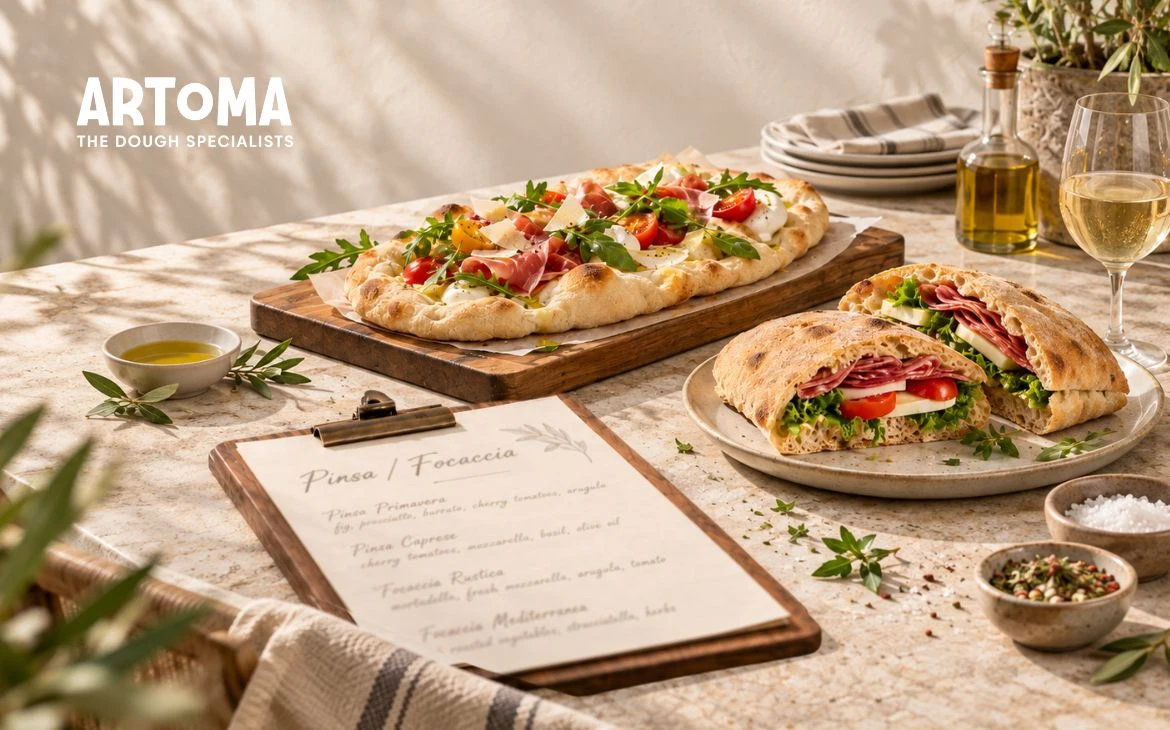
Pinsa and focaccia both belong to Italy’s rich tradition of dough-based products, but they are not the same thing. They can appear in similar dining occasions and pair well with Mediterranean ingredients, yet their character and the way they can be used are different.
For a foodservice professional, the point is not to decide which one is better. It is to understand what role each option should play on the menu. Will it work as bread or an accompaniment? As a base for toppings? As a standalone dish or a sharing option? These questions lead to a more useful comparison.
Are pinsa and focaccia the same thing?
No. Focaccia is an Italian type of bread with many local and culinary variations. Pinsa, by contrast, is commonly used as a base on which different ingredients can be added before or after the final bake.
This does not mean the two uses cannot overlap. ARTOMA itself suggests, for example, serving Pinsa Romana in a focaccia-inspired way, with olive oil, coarse salt, herbs and Mediterranean ingredients. This is a serving style for pinsa, not an indication that the two products are identical.
What are the main differences between pinsa and focaccia?
The comparison becomes clearer when it goes beyond appearance and looks at structure, texture and, most importantly, the role each option can play on the plate.
Shape and dough character
Focaccia does not have one single recipe or form. There are different Italian traditions and versions, so it would not be accurate to assign one standard thickness, hydration level or preparation method to all focaccia.
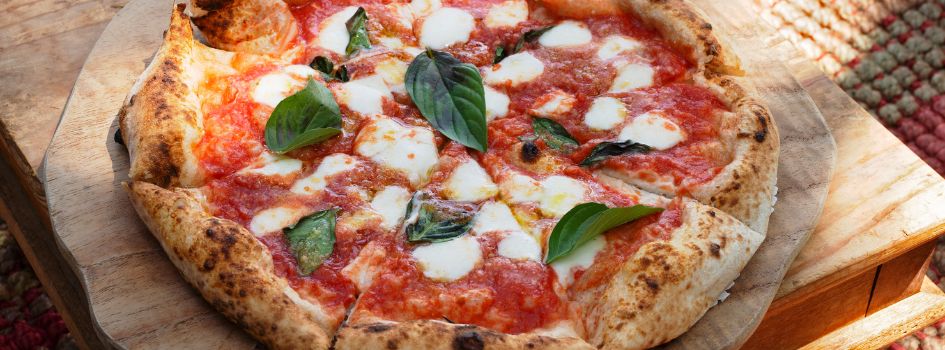
ARTOMA’s Pinsa Romana is available in oval and round versions. Its official page describes a crispy exterior and soft interior, while individual product codes come in specific sizes and weights depending on the intended use.
Texture and final result
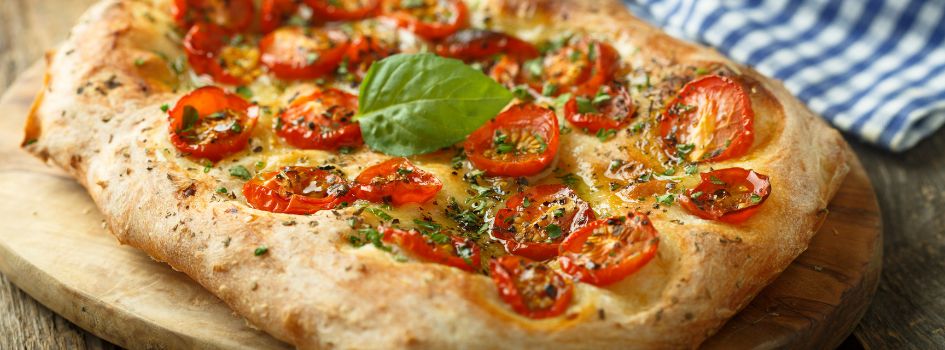
With focaccia, the dough itself and its surface are usually a central part of the eating experience. It can be served with olive oil, salt and aromatic herbs or enriched with additional ingredients, depending on the style.
With pinsa, the base creates room for different combinations. With ARTOMA’s Pinsa Romana, ingredients can be added before the final bake or after the base has been baked. This allows professionals to create different menu options using the same base concept.
Serving style and the role of toppings
This is perhaps the most useful distinction for a professional menu. Focaccia can stand on its own as bread, an accompaniment or a snack, while it can also support more elaborate combinations. Pinsa has a clearer role as a base for toppings and complete compositions.
This difference does not need to be seen as a limitation. On the contrary, it helps a business decide exactly what it wants to add to the menu and what kind of experience it wants to create for the customer.
Where does focaccia fit on a menu?
Focaccia can be used in different ways depending on the concept of the business. In a restaurant, it can work as bread or an accompaniment at the table. In a café or all-day concept, it can become the base for a snack or sandwich, while in a sharing menu it can be served cut into smaller pieces alongside other dishes.
The important thing is to avoid the idea that there is only one correct way to use it. Focaccia is an entire category with different traditions and applications, so the choice depends on the style of the menu and the way it is served.
How can pinsa be used?
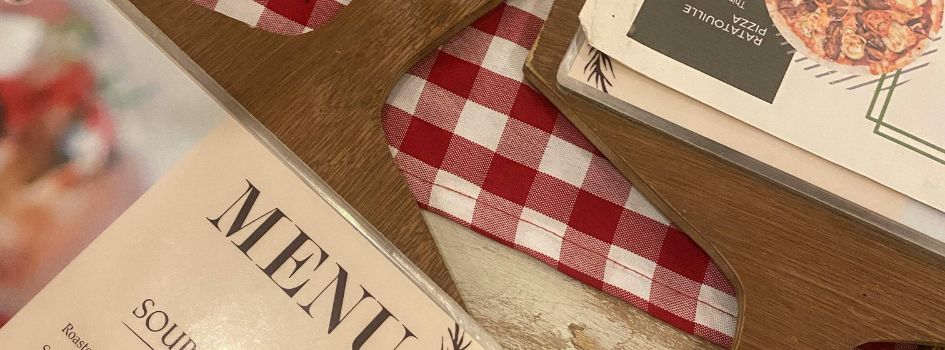
Pinsa Romana can work as a complete base for different ingredient combinations. ARTOMA offers oval products in different sizes as well as a round version, while its official instructions state that toppings can be added before or after baking.
In practice, this makes it possible to create a wide range of dishes, from simple combinations with just a few ingredients to more complete menu proposals. It can also be cut and served for sharing, depending on the concept and presentation chosen by the business.
For more inspiration, you can also explore different serving ideas for Pinsa.
Can pinsa be served like focaccia?
Yes, as a serving style. ARTOMA has already presented an official suggestion in which pinsa is served in the style of Italian focaccia, with olive oil, coarse salt, oregano, thyme and other Mediterranean ingredients.
This creates an interesting bridge between the two culinary ideas. A professional using Pinsa Romana can choose a simpler serving style, where olive oil and herbs take centre stage instead of a composition with many toppings.
Clear menu wording is still important. Pinsa served in this way remains pinsa. “Focaccia-style” describes the inspiration and application, not the identity of the product.
Pinsa or focaccia: what should a business choose?
The answer starts with the menu rather than with a general comparison between the two.
If the need is for an Italian bread that will work as an accompaniment, snack or part of a broader composition, focaccia is a natural direction. If the goal is a ready base on which different toppings and complete menu creations can be developed, pinsa serves a different purpose.
There is also a middle ground. Pinsa Romana can be used in a simpler way inspired by focaccia-style serving. This allows a business to vary the presentation of the same base without presenting the two products as interchangeable.
Before making a choice, it is worth considering four simple factors: the role of the dish on the menu, the serving style, the intensity and quantity of toppings, and the overall concept of the business. These are more useful criteria than trying to find an absolute winner between pinsa and focaccia.
Two different approaches, more possibilities for the menu
Pinsa and focaccia can exist in the same culinary conversation without being confused. Focaccia has its own tradition as an Italian bread, while pinsa offers the logic of a base that can support different compositions and serving styles.
For a professional kitchen, the best choice is the one that clearly supports the concept and the role of the dish. If you want to explore the available versions and suggested applications of Pinsa Romana, you can discover the ARTOMA range and serving ideas.
Explore Pinsa Romana and ARTOMA’s suggestions for different applications and serving styles.