
 Ελληνικά

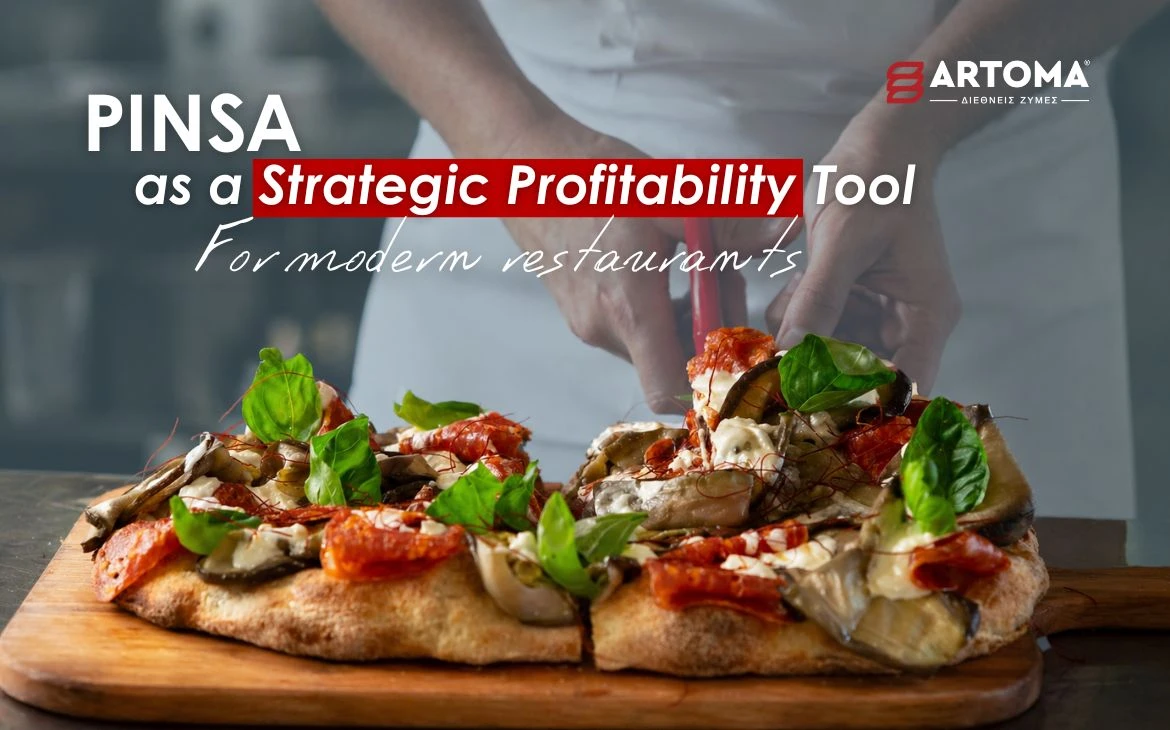
In today’s food service industry, success is no longer determined solely by taste, but by how intelligently a menu is structured. Hospitality professionals are constantly balancing cost, speed, quality, and customer experience. Within this context, Pinsa Romana is not simply another food trend, but a product that can significantly influence the overall performance of a business.
Its differentiation from traditional pizza is not only culinary, but also strategic. The unique dough composition, high hydration, and long fermentation process create a lighter, more digestible result, which changes the way customers perceive the product. It is no coincidence that more and more businesses are reconsidering the debate of Pinsa vs Traditional Pizza: A Healthier Alternative, not only in terms of taste, but also in terms of menu positioning.
This positioning allows pinsa to be placed in more premium menu categories, increasing the average order value. Unlike heavier options, it can easily fit into brunch menus, sharing concepts, or even gourmet proposals, giving restaurant owners greater flexibility and higher profit margins.
At the same time, one of the most pressing challenges in the hospitality industry remains staff shortage. When kitchen operations rely on complex preparation processes and highly specialized personnel, the problem becomes even more intense. Pinsa helps reduce this dependency by offering consistency and ease of execution, directly supporting the broader challenge of staff shortage in hospitality and the need for more efficient operational solutions.
At the same time, consumer behavior has clearly shifted. The demand for lighter and more balanced food options is no longer just a trend, but a lasting change in market expectations. Pinsa successfully meets this need without compromising on flavor, which explains why it has become so strongly associated with the modern philosophy of dining, as reflected in Artoma’s journey within the healthy food sector.
From a menu engineering perspective, flexibility is perhaps its greatest advantage. From simple everyday options to more complex recipes, pinsa allows creativity without increasing kitchen complexity. This means better cost control, reduced waste, and more opportunities for differentiation. Clear examples of this flexibility can be seen through recipe ideas and professional menu applications developed specifically for restaurant use.
Of course, no product can perform without the right support behind it. Choosing the right supplier plays a critical role in consistency, quality, and the overall customer experience. For any business looking to strategically integrate pinsa into its menu, working with a reliable partner makes all the difference, which is why Artoma has become a trusted wholesale choice for many restaurants investing in this product.
Beyond its technical characteristics, there is also the matter of identity. Customers do not choose only based on what they eat, but also on what that food represents. When a product is backed by history, expertise, and a clear philosophy, it strengthens the overall dining experience. This philosophy is clearly reflected in the interview with Artoma’s founder, where it becomes evident how a product can evolve into a true strategic business advantage.
Conclusion
Pinsa Romana is not simply a new addition to the menu. It is a tool that directly affects cost management, operational speed, customer experience, and ultimately profitability. In an increasingly demanding market, the businesses that stand out are those that view the product not as an isolated menu item, but as part of a broader strategic vision.